
Mulla Mustafa Besarani
Classical Kurdish poetry
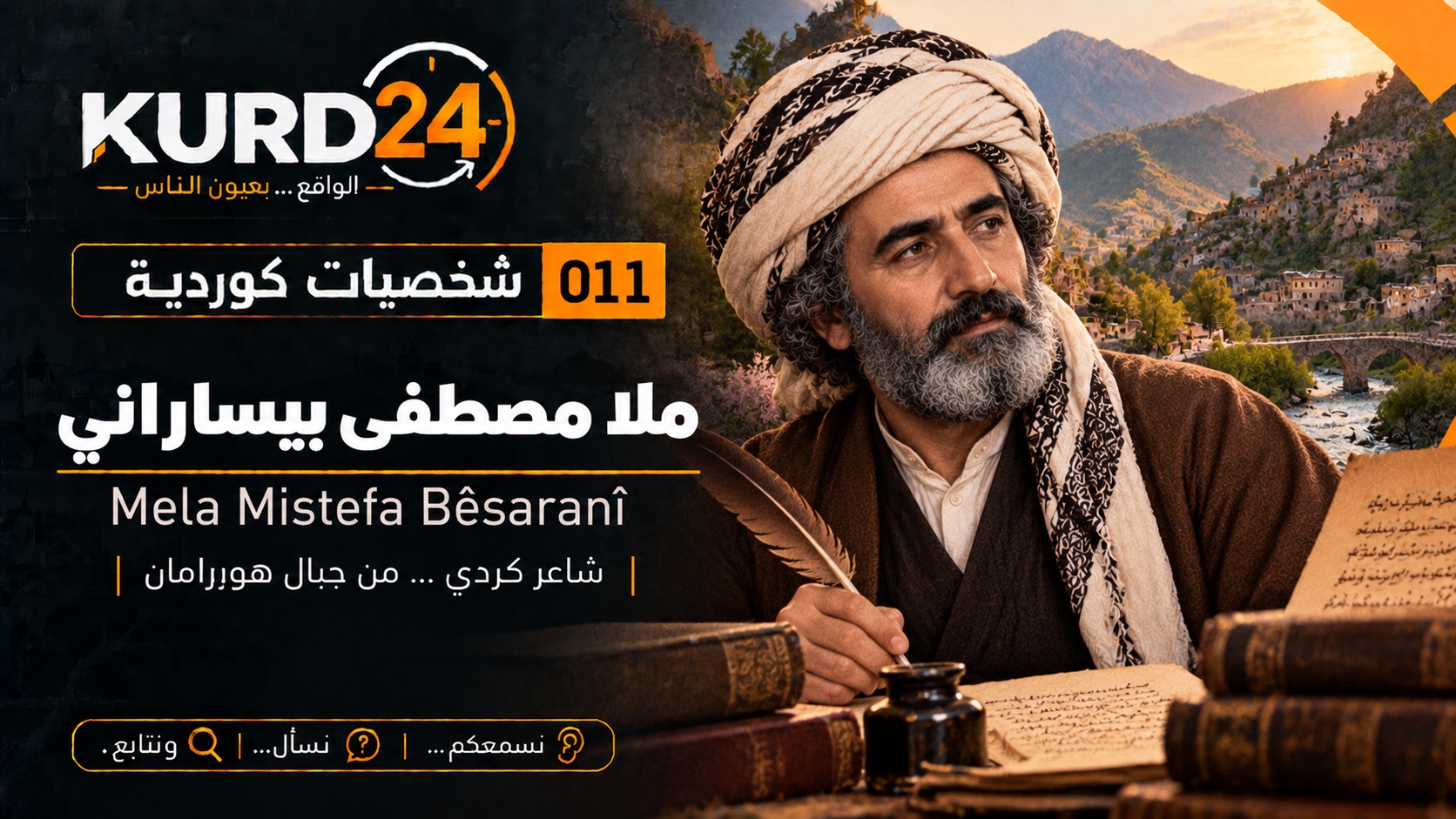
Basic information
- Name:Mulla Mustafa Pisarani
- In Kurdish:Mela Mistefa Bêsaranî
- Birth:About 1641–1643 AD
- Place of birth:Besaran Village - Horaman/Zhavarod District, near Sanandaj in Iranian Kurdistan
- Death:About 1701–1702 AD
- Domain:Poetry, religious sciences and education
- The language of his poetry:Kurdish, in the Gurani-Hawrami dialect/literary tradition
- What he is most notable for:One of the prominent names in classical Kurdish poetry, his poetry is distinguished by nature, love, mysticism, and meditation.
Who is Mullah Mustafa Pisarani?
Mulla Mustafa Bisarani is a Kurdish poet and religious scholar who lived in the seventeenth century. He is considered one of the important names in the classical Kurdish poetic heritage, especially in the Gurani/Hawrami literary tradition. He came before great poets from later stages of Kurdish literature, and left poems in which love, nature, gratitude, and mysticism were mixed. What makes his experience important is that his poetry gives us a window into an early stage of the development of Kurdish written literature, long before the emergence of modern Kurdish poetic schools.
His birth in Besaran
He was born in the village of Bêsaran in the Javarud/Horaman region, within the historical area surrounding Sanandaj. From the name of his village came his literary fame: Bêsaranî, meaning attributed to Bêsaran. Traditional sources place him in the seventeenth century, with limited discrepancy in the year of his birth between 1641 and 1643.
He grew up in a religious family
Pisarani grew up in a family associated with religious sciences. One biography states that his full name is: Mulla Mustafa bin Mulla Qutb al-Din bin Mulla Shams al-Din. He began his education in a traditional religious environment, then moved between a number of study centers in the region. The sources mention Nodesheh, Bayglan and Sanandaj among the places where he studied. In Sanandaj, he completed an advanced aspect of his religious education and obtained a license that qualified him to teach.
A student wanders around Huraman
Religious education in the Besarani era was not in the university form known today. The seeker of knowledge would move between mosques, quarantines, and religious schools to receive knowledge at the hands of different scholars. Pisarani took this path. Aladdin Sajjadi's biography states that he moved to Huraman to study, and stayed for a period in Nodesheh. He also spent a long period in Bayglan studying under Mullah Qasim, then completed his studies in Sanandaj. After the end of this stage he returned to Besaran.
From student to mullah and teacher
After obtaining his degree, he became known as: Mulla Mustafa Pisarani. He returned to his village and worked in teaching and religious sciences. Literary sources describe him as a scholar with good knowledge of religious sciences, and that he in turn granted licenses to a number of students. But what preserved his name after three centuries was not teaching alone. It was poetry.
Besarani the Poet
Besarani wrote within the Gurani/Hawrami Kurdish literary tradition, a tradition that had an important place in classical Kurdish literature in and around the regions of Huraman and Ardalan. Literary studies classify his poetry into three prominent themes: flirtation and love - knowledge and mysticism - social themes, with a distinctive presence of nature. Baskurd But the poetry of love and flirtation occupies a special position in his experience.
Nature... one of the heroes of his poetry
One of Besarani's most beautiful features is his relationship with nature. Mountains, valleys, flowers, trees and springs are not just a background in his poems. He lived in the mountainous nature of Huraman, and his surroundings turned into poetic material. Kurdish historian and writer Alaeddin Sajjadi describes his strong connection to the landscapes of Besaran and Horaman, and sees the beauty of the region as one of the sources of his poetic imagination. That is why when we read Besarani we find an intertwining of: nature, beauty, love and spirit.
Love in Besarani’s poetry
Love is a central theme in his poetry. Literary sources attribute part of his sentimental poems to a love story associated with a woman named Amîne from Bayglan. Aladdin Sajjadi mentions this novel in detail, and links the experience of love with an important aspect of Pisarani’s poetry. However, when preparing the media material, it is better to present it as a literary narrative contained in the sources of his biography, rather than considering all its details as a historical fact that can be proven independently. This is important because part of the biography of ancient poets has come down to us through oral narration and literary traditions.
From human love to mystical love
Pisarani's concept of love did not always remain limited to the relationship between two people. In some aspects of his poetry, love turns into a mystical and spiritual experience. This intersection between poetry and Sufism is common in many poetic traditions in the region, where the poet can use the language of the beloved, beauty, and longing to reach broader spiritual meanings. This is why the sources classify Bisarani's poetry as both ghazal and irfan.
Was he a Sufi?
Some sources mention that he was associated with the Khalwati Sufi order. This is consistent with the mystical presence evident in parts of his poetry. But detailed information about his Sufi life is less documented than the available literary information about his poetry and teaching, so it is better not to exaggerate in basing his entire biography on this point.
Why is the Besarani language important?
The importance of Pisarani lies not only in what he said, but also in the literary language he used. Gorani/Hurami played an important role as a literary language in parts of Kurdistan, and a number of classical poets appeared in it. Pisarani is mentioned among a series of poets who wrote in this tradition before poets such as Khana Ghobadi and other poets of the seventeenth and eighteenth centuries. Baskurd This is why his poems represent important material not only for the study of literature, but also for the study of the history of the Kurdish language and the development of its literary traditions.
Did he leave a collection?
Besarani's poetry reached later generations and his poems were collected in collections. Studies on his poetry manuscripts reveal that the process of collecting his works is not simple. There are various manuscript copies and narrations, and there are also discussions among researchers about the attribution of some poems to him. Bokan This is a very important point when talking about a poet who lived more than three centuries ago. His works were not preserved in the modern way in which the books of a contemporary poet are preserved, so researchers relied on manuscripts, transmission, and literary narration to reconstruct his legacy.
His personal life
Aladdin Sajjadi's novel states that Pisarani did not marry throughout his life. This novel is linked in the literary biography to his love story, which was reflected in his poetry. But again, ancient personal details should be treated with caution, because the amount of direct documentation available about his life is limited compared to figures of the 19th and 20th centuries.
His death
Sources differ slightly in determining the date of his death. Aladdin Sajjadi dates his death to the year 1702 AD at the age of approximately 61 years, while other sources mention 1701 AD. Sajjadi also mentions that he was buried in the area around Besaran and that his grave became known to the people of the region. Therefore, the most accurate formulation we have is: Death: approximately 1701–1702 AD, Besaran.
Why do we remember Mulla Mustafa Pisarani?
Because Besarani represents an early and important phase of classical Kurdish literature. He was a religious scholar and teacher, but at the same time he was able to transform the nature of Huraman, love, beauty and spiritual experience into poetry that remains present more than three centuries later. Writing within the Gurani/Hawrami tradition also gives his works additional value today, as they help in understanding the historical diversity within Kurdish literature itself. His story is also different from many of the characters we discussed previously in the series; We are not talking here about a leader, politician, or artist who lived in the era of recording and radio, but rather about a poet from the seventeenth century whose words have reached us through manuscripts and literary memory.
This is precisely what makes his presence important in the Kurd 24 series | Kurdish characters.