
Yılmaz Güney
Cinema
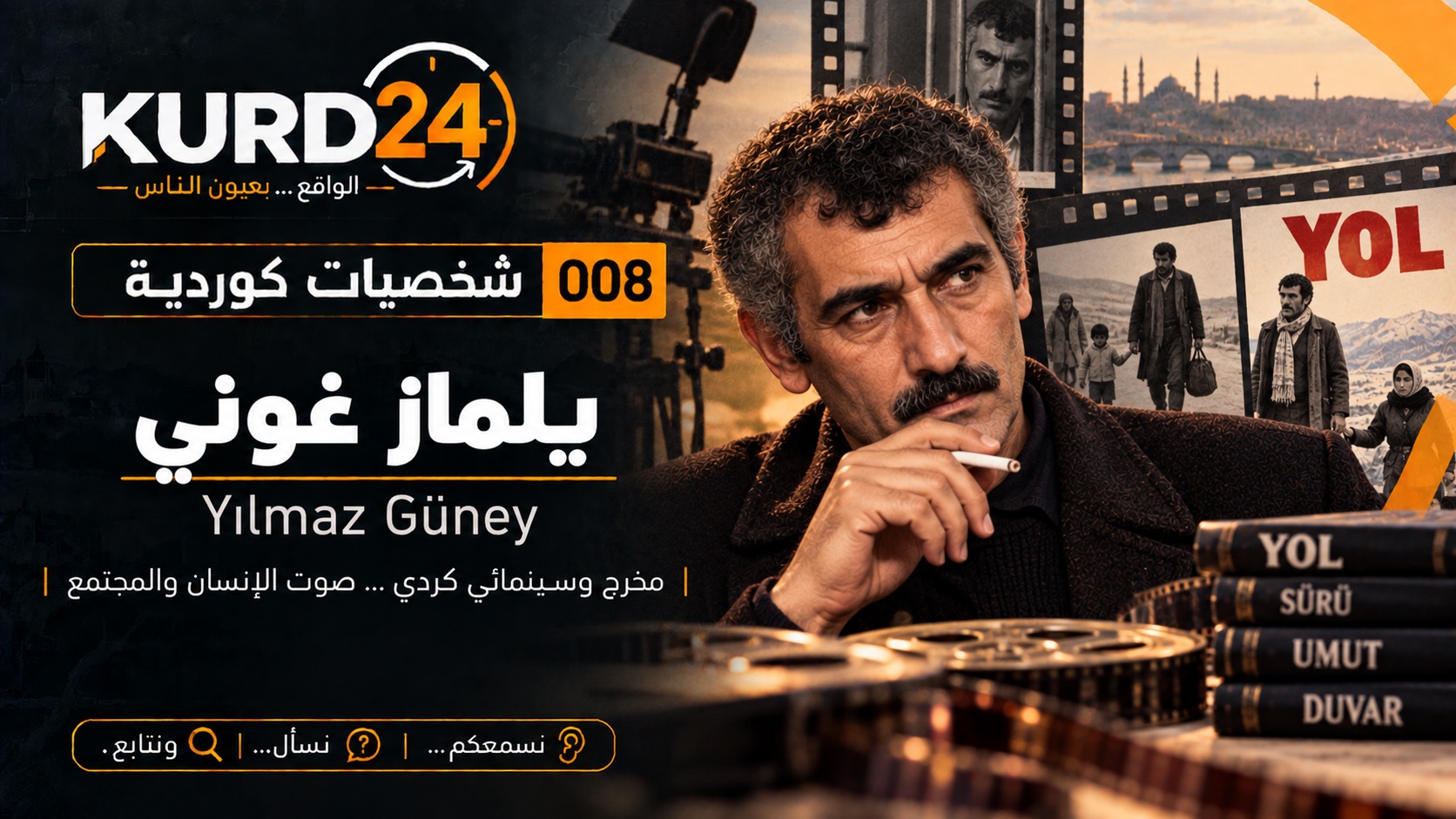
Basic information
- Original name:Yılmaz Pütün
- Technical name:Yılmaz Güney
- Birth:April 1, 1937 – Adana Region, Turkey
- Death:September 9, 1984 - Paris
- Domain:Acting, directing, screenwriting, and literature
- Original:From a Kurdish family
- His most famous works:Yol – The road
- The most prominent global achievement:Palme d'Or at Cannes 1982 for Yol, shared with Missing
Who is Yilmaz Guney?
Yilmaz Guney is one of the most prominent names to emerge from Turkish cinema in the twentieth century. He started out as an actor in popular films, then became a screenwriter, director and producer. His films dealt with poverty, work, imprisonment, marginalization, and identity, and his international fame reached its peak when “Yol” won the Palme d’Or in 1982.
A poor childhood in Adana
He was born in the Adana region in 1937 to a Kurdish family that immigrated to southern Türkiye. A biography published by the Kurdish Institute in Paris states that his mother’s roots are from the Mouches region and his father’s family is from Sivric. He grew up in difficult economic conditions, and from a young age he worked in manual and agricultural work. It is an environment that left an impact on the social characters who later appeared in his films.
From literature to cinema
He was interested in writing and stories in his youth, then entered the world of cinema in the fifties and worked with director Atef Yilmaz in writing and acting. He faced prosecution for political writings, and spent about eighteen months in prison in the early 1960s.
“The Ugly King”
In the 1960s, he became a popular movie star and was known by the nickname “Çirkin Kral,” meaning “the Ugly King.” He often played the characters of men from the popular classes who clash with authority or harsh circumstances, and then gradually turned to writing and producing the films he wanted to make. He founded his company “Güney Filmcilik” in 1966.
From entertainment to social cinema
Social issues became increasingly important in his works. His films include “Umut” (Hope, 1970), “Sürü” (The Herd, 1978), “Yol” (The Road, 1982), and “Duvar” (The Wall, 1983). In “Umut,” he placed a poor man working with a horse carriage at the center of a story about poverty and the search for a way out of it.
Prison and the film industry
He was imprisoned again in the 1970s. In 1974, he was convicted of the murder of a judge and sentenced to prison; The circumstances of the case remain disputed in later accounts. He continued to write scripts inside prison, and some of his works were produced by directors collaborating with him outside. He wrote “Sürü”, which was directed by Zeki Okten, then he wrote “Yol”, which was filmed by Şerif Güren. The Cannes Film Festival officially registers Guney and Goren as co-directors of the film “Yol.”
What's Yol's story?
The film follows prisoners who receive temporary leave to go out and return to their families. Their journeys reveal other forms of constraints outside prison, and address poverty, family, power, women's status, identity, and the social and political realities of Turkey at the time.
The escape and the Palme d'Or
In 1981, he left Türkiye after leaving prison on vacation, and settled in France, where he worked on the final version of “Yol.” The film was shown at the Cannes Film Festival in 1982 and won the Palme d'Or, shared with Costa-Gavras' "Missing," and it also won the FIPRESCI International Critics' Award. These awards are recorded in the official festival record.
The Wall movie – Duvar
He directed the film “Duvar” in France in 1983, dealing with prison conditions in Türkiye. He participated in the official competition of that year's Cannes Film Festival, and it was his last film as a director.
Goni and the Kurdish issue
His biography is linked to his Kurdish origins and his political positions, but his films are not limited to the topic of identity; It also addressed social classes, poverty, work, prisons, the status of women, and social violence. That is why his experience remained influential in the history of Turkish cinema and in Kurdish cultural memory.
His final years and legacy
He died in Paris on September 9, 1984, at the age of 47, and was buried in Père Lachaise Cemetery. His films continued to be shown and studied after his death, and the Cannes Film Festival presented the restored and complete version of “Yol” in its classic program in 2017.
Why do we remember him?
Because he moved from popular acting to making cinema that deals with the marginalized, power and identity, and he continued to write films from prison, then “Yol” reached the top of the Cannes Film Festival in 1982.